Product Design

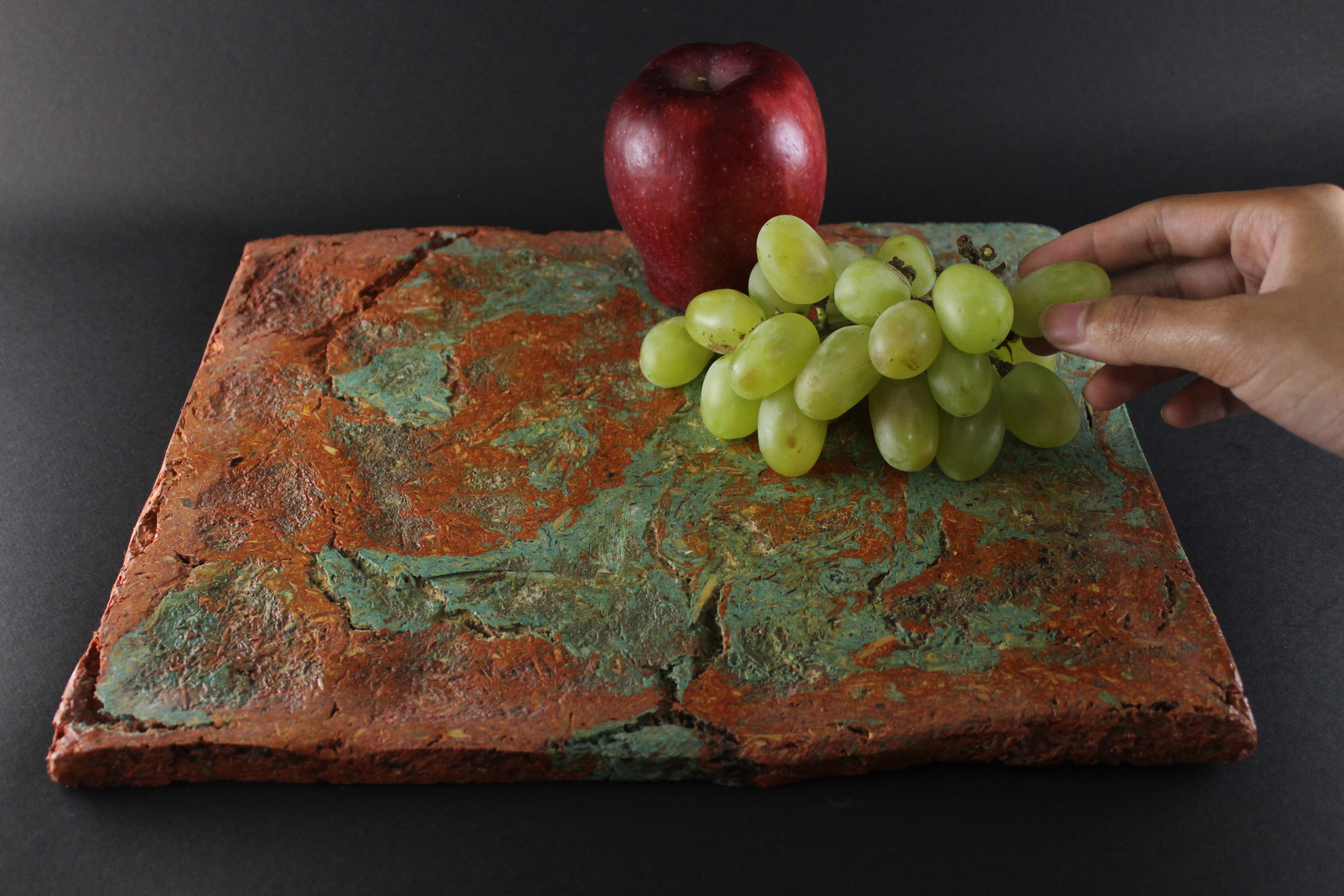
Material Exploration, flat fruit plate made from sawdust

Material Exploration

THEME

Reuse of Waste, a sustainability led material study.

MATERIAL

Sawdust, chosen for its abundance and biodegradability. Even the moulds were made from waste.

PROCESS

Cleaned and mixed by hand, then heat treated and sun dried over several weeks.

OUTCOME

A tray, a candle holder, and a card holder. Fully compostable.

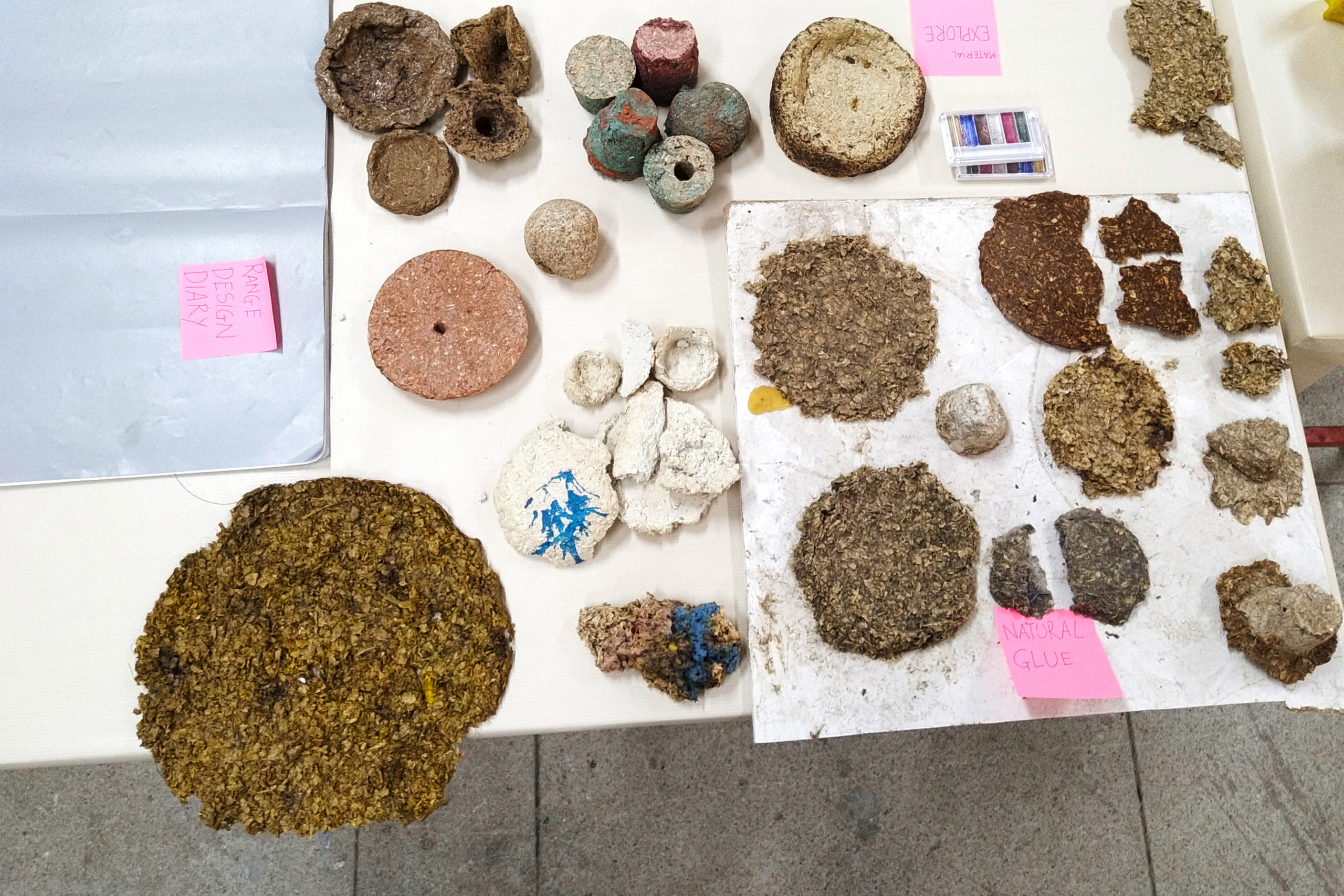
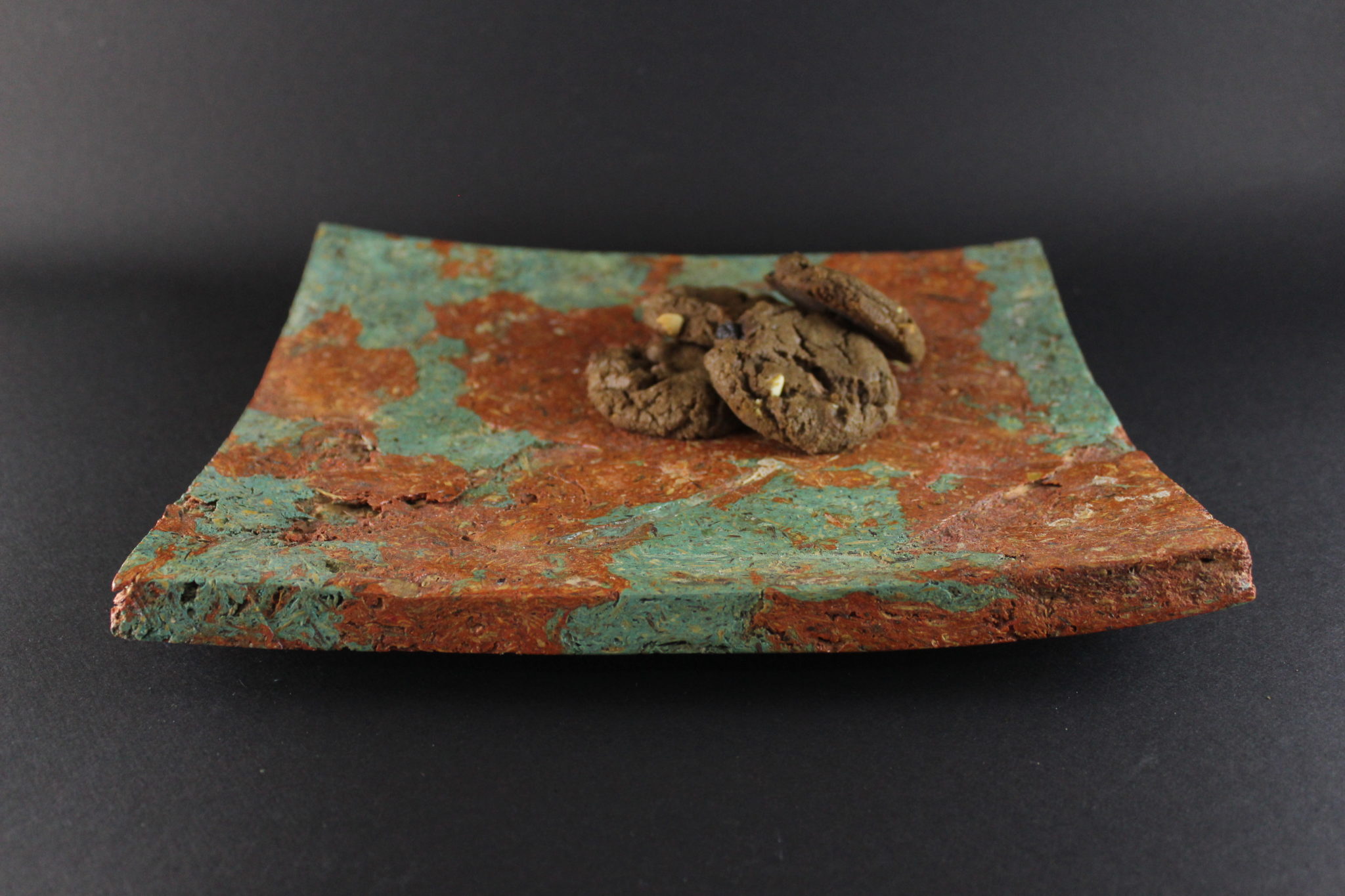
An exploration of sawdust as a sustainable design material, recycled through every stage of development, including the moulds used to shape it. Impurities were cleaned out and the material mixed entirely by hand, then heat treated and left to sun dry over a period of many weeks.

Material tests were run to see which form best suited the final products. The result was a small compostable range: a flat fruit plate, a card holder shaped like a boat, and a candle holder.
Sawdust fruit plate
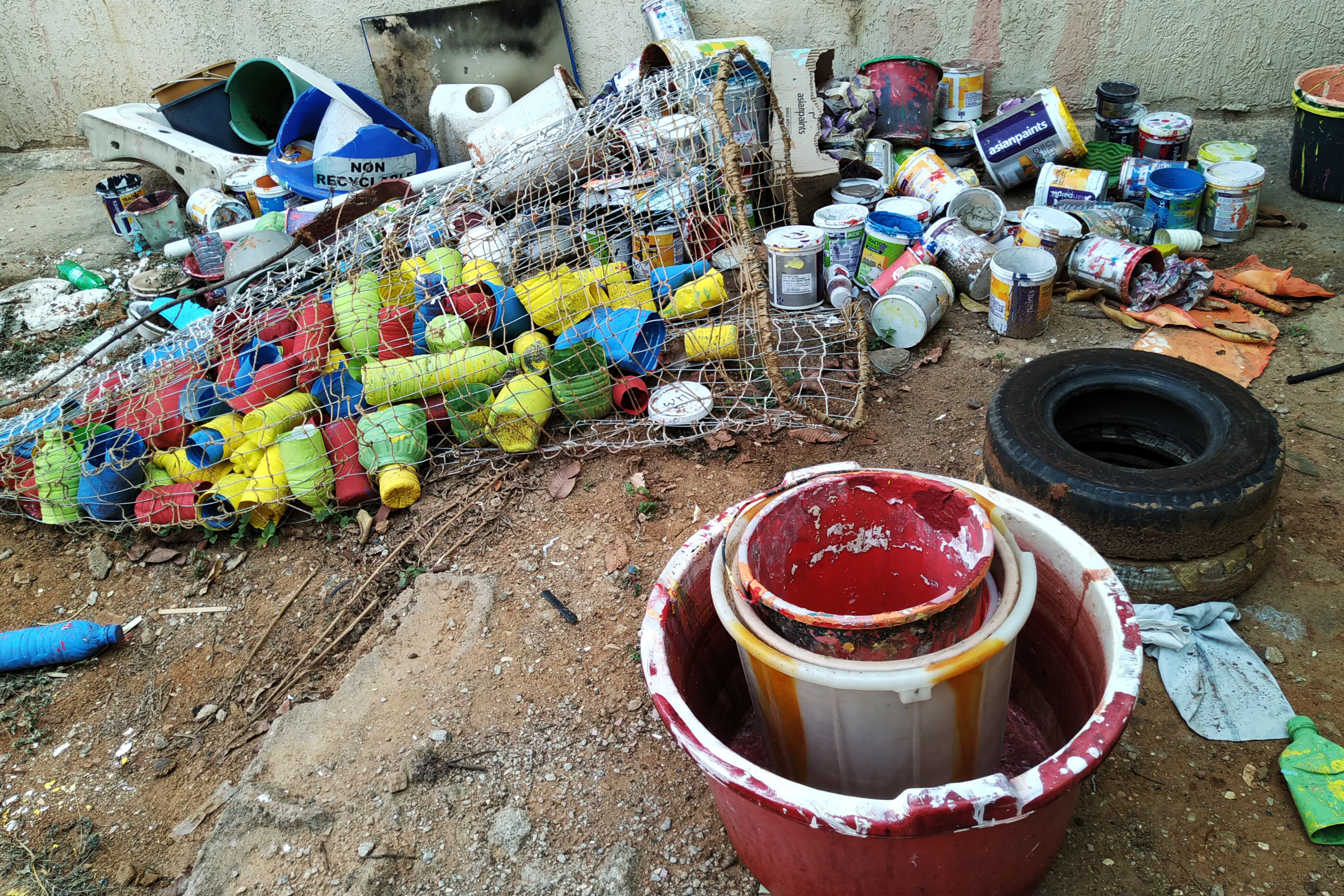
Waste materials collected for the sawdust study
Sawdust compound being mixed by hand
Sawdust moulds drying
Sawdust material sample swatches
Sawdust card holder, boat shaped
Sawdust candle holder
Finished flat fruit plate made from sawdust, styled with an apple and grapes
Tuffet, an ergonomic wooden seating design

Tuffet

FORM

An ergonomic, four dimensional seating tuffet for all age groups.

PROTOTYPE

A full scale polystyrene prototype built to test scale, proportion, and comfort early.

MATERIAL

Final piece crafted in wood, shaped and finished by hand.

FEATURES

Seats two people at once, or works just as well as a single seat.

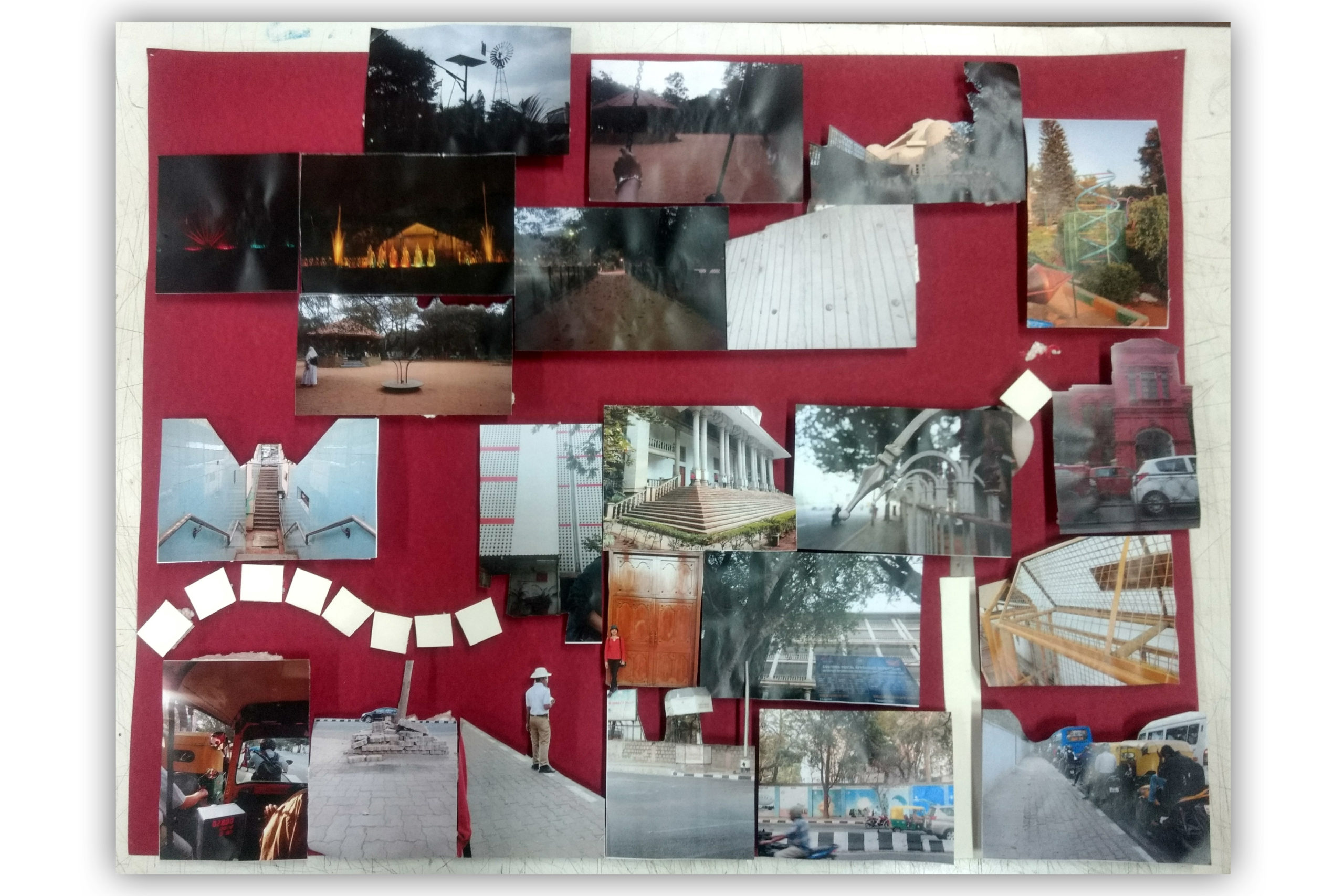
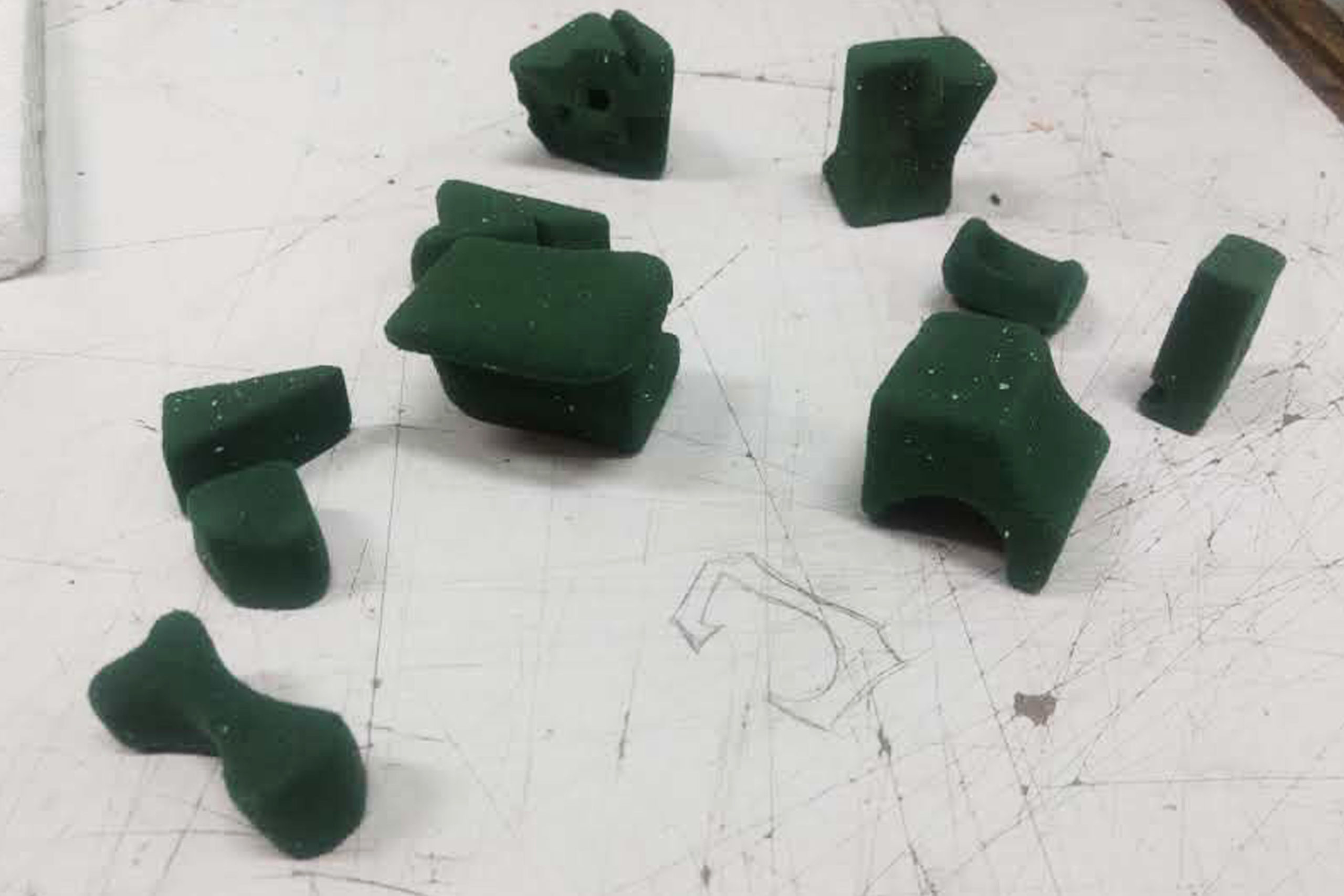
Tuffet is an ergonomic seating design built for shared, everyday moments. A mood board and small foam form studies shaped the early direction, followed by a full scale polystyrene prototype used to test the form before it was carried into wood.

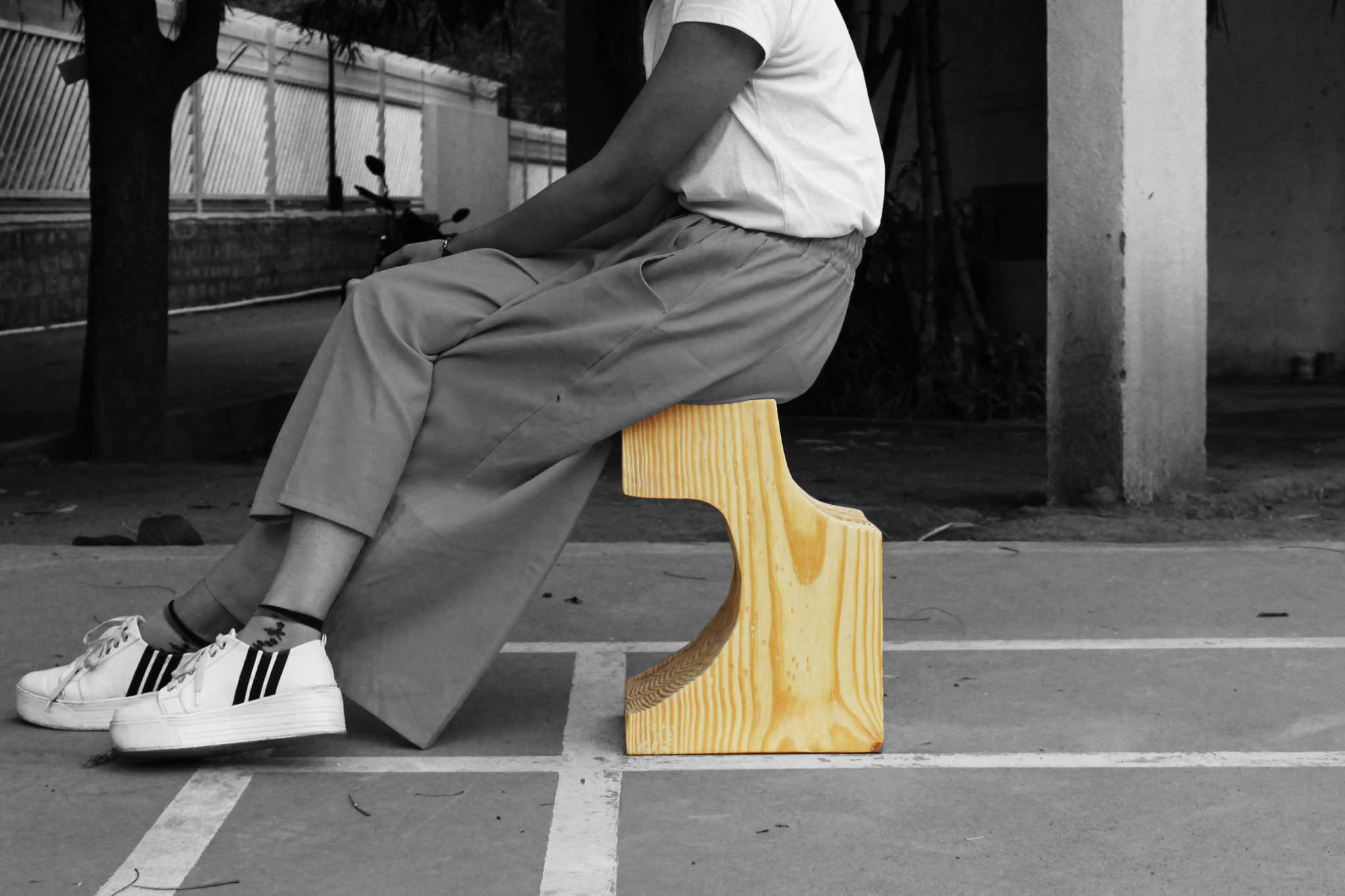
The final piece was shaped and finished entirely by hand. Its ergonomic form works both as a two person seat and as a single seat, making it a flexible resting spot for short breaks throughout the day.

Mood board for the Tuffet seating design
Foam form study models for the Tuffet
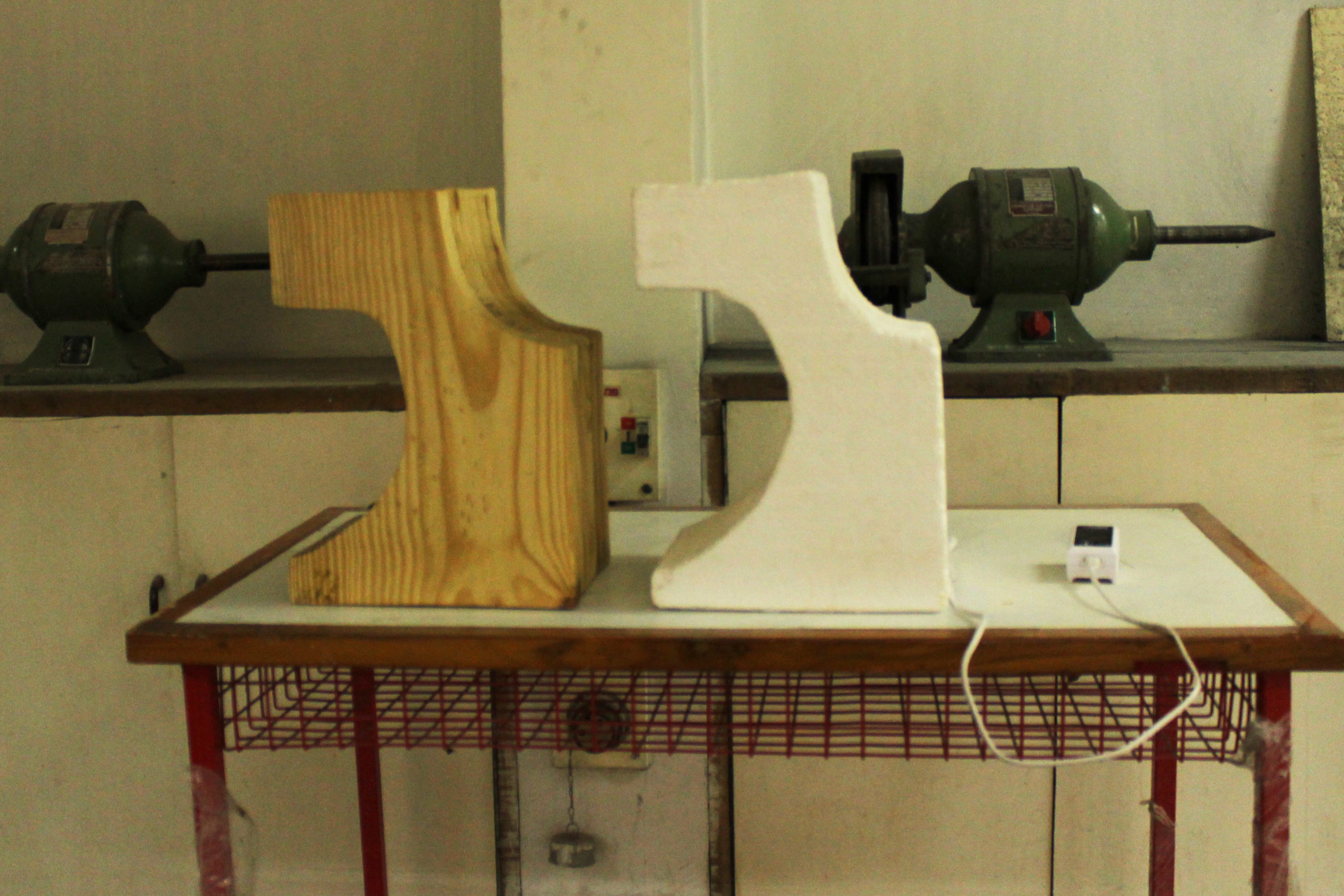
Full scale polystyrene and wood prototypes of the Tuffet
Shaping the wood Tuffet by hand with an angle grinder
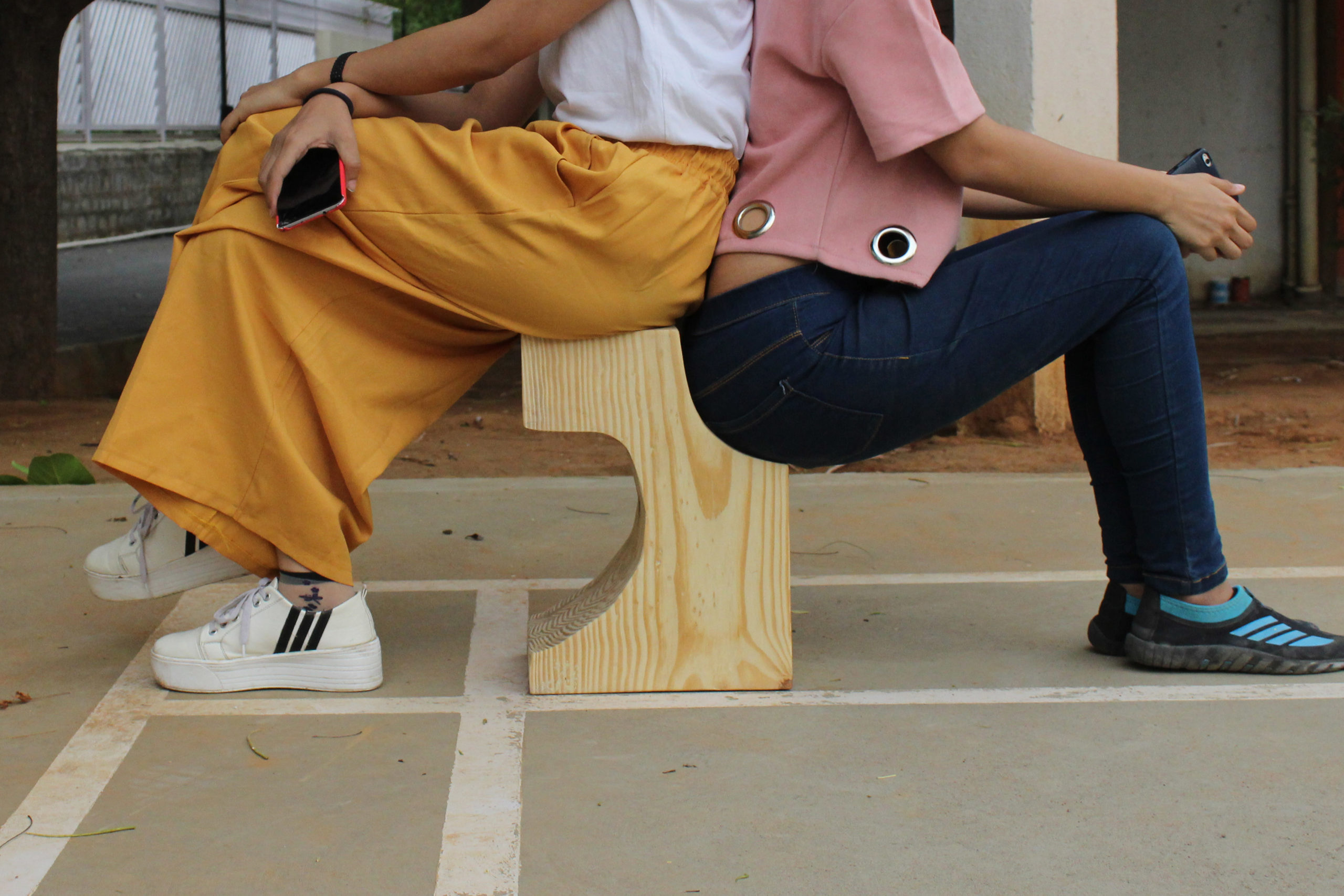
Two people seated on the Tuffet at the same time
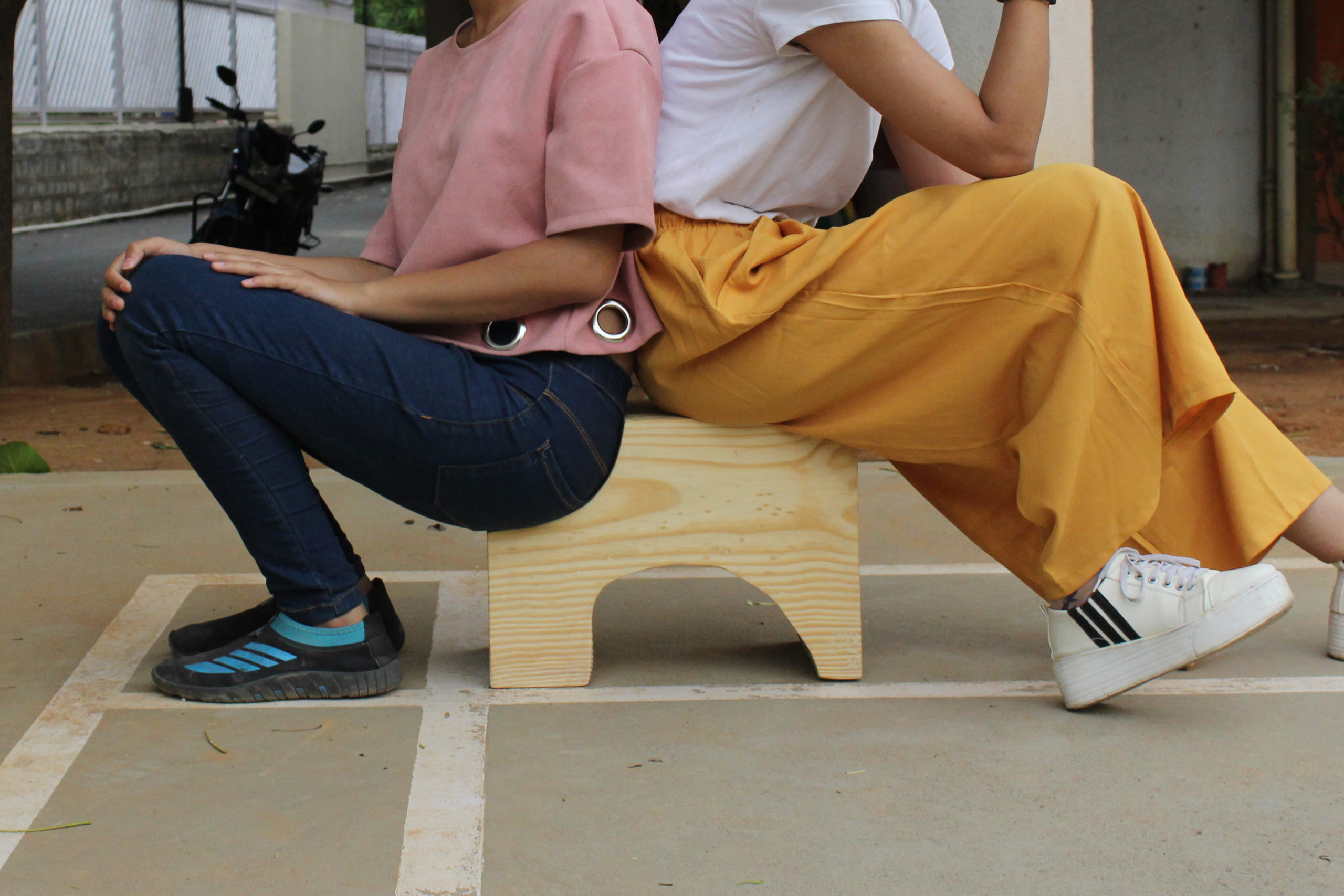
Two people seated on the Tuffet at the same time, alternate view
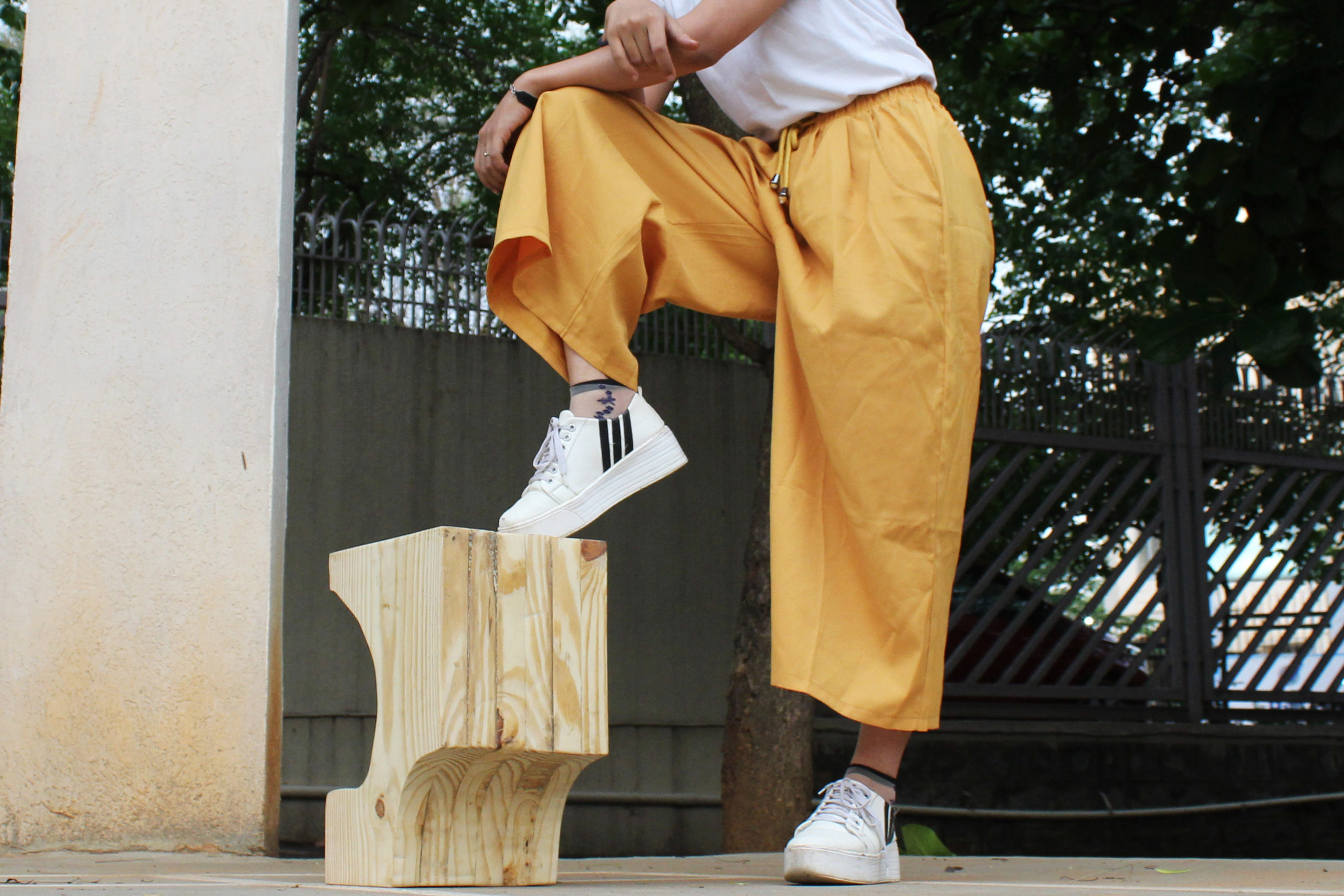
A single person seated on the Tuffet
A single person seated on the Tuffet, alternate view
Crinkle, an ice cream cup with a built in spoon

Crinkle

PROBLEM

Plastic spoons get used once, then thrown away, adding to landfill waste.

INSPIRATION

Drawn from the bhelpuri serving spoon, similar to the paper cones used for hot chips at fish and chip shops.

FUNCTION

Keeps ice cream off fingers, with no instructions needed to use it.

MATERIAL

Made from a sustainable material suited to single use serving.

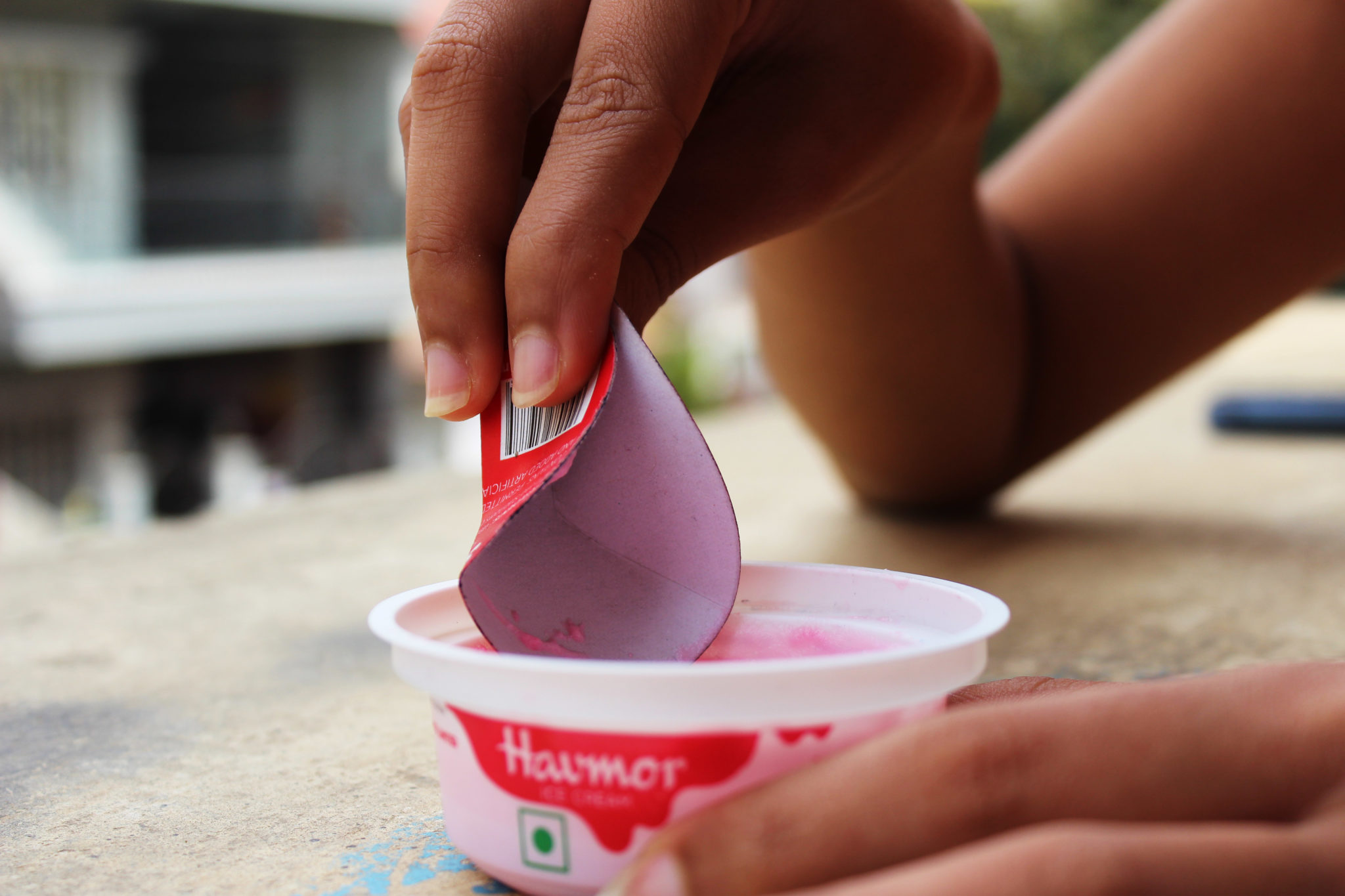
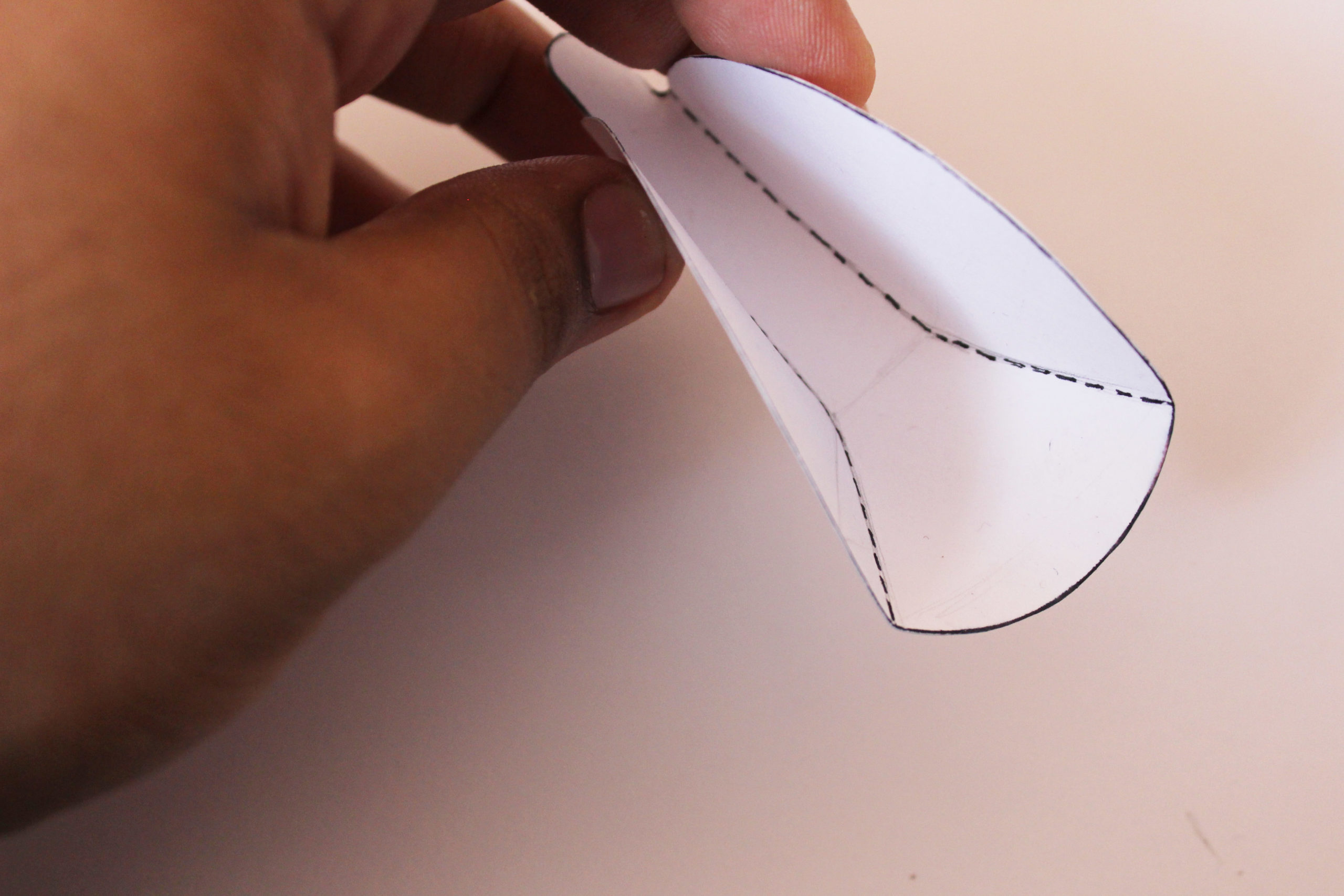
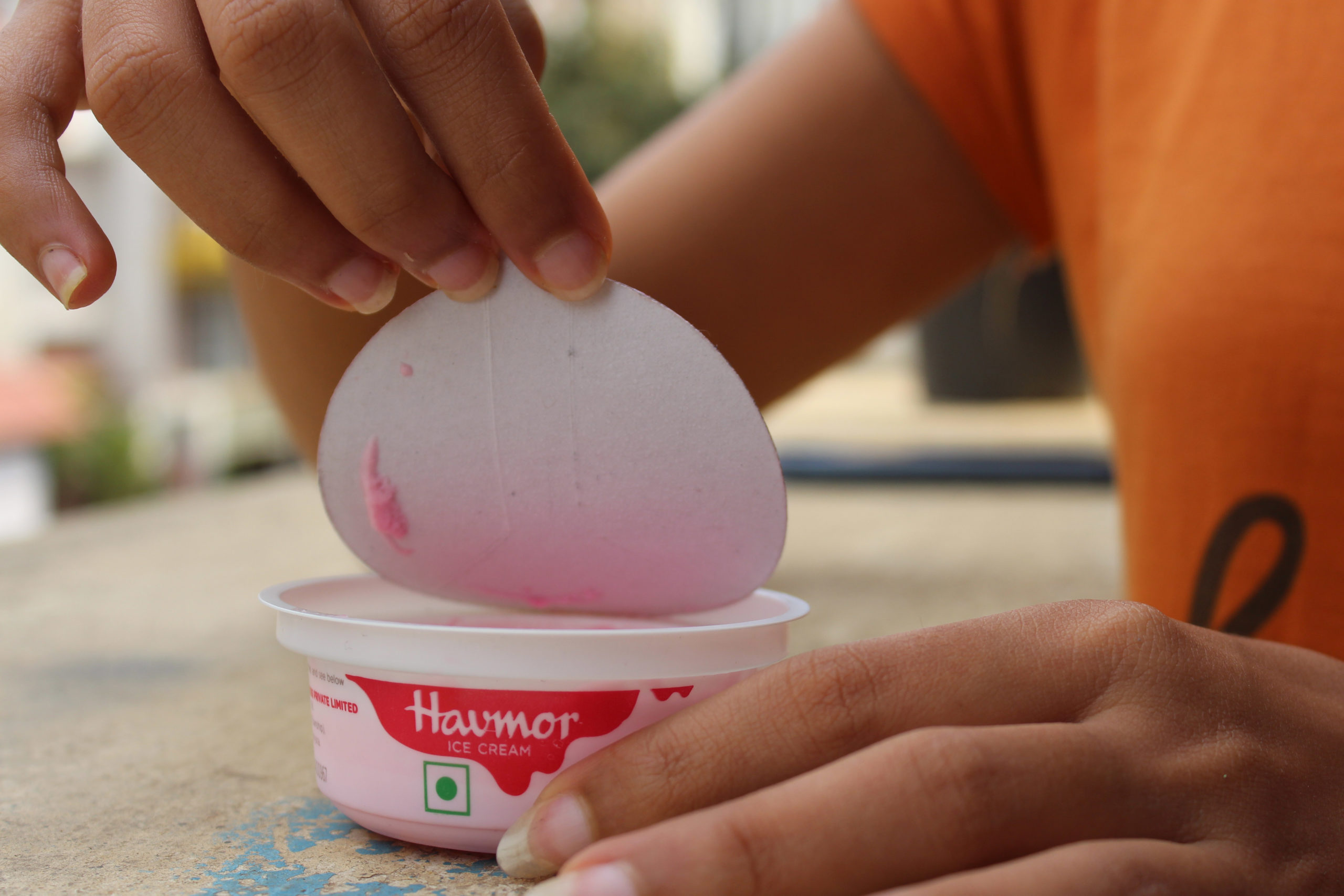
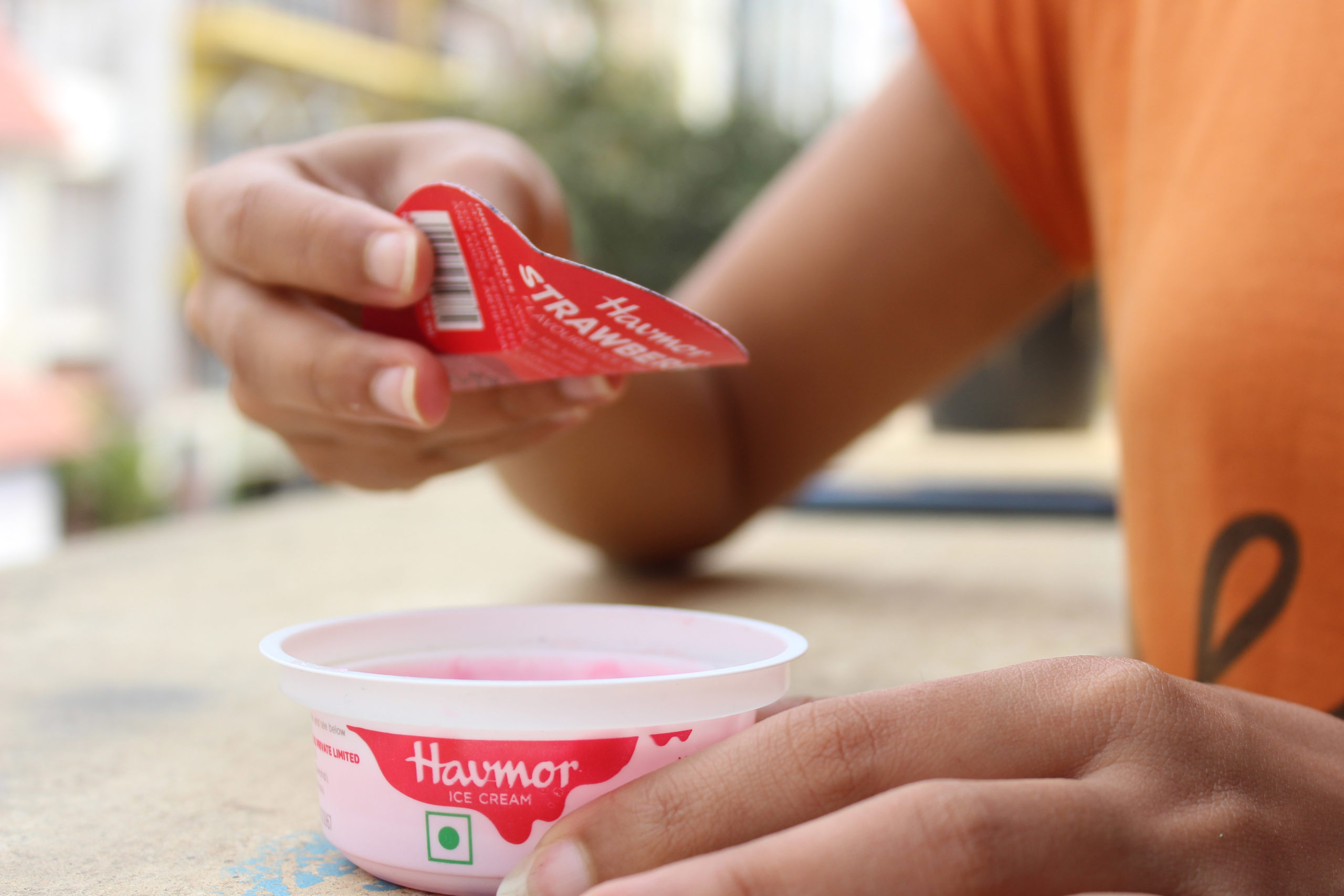
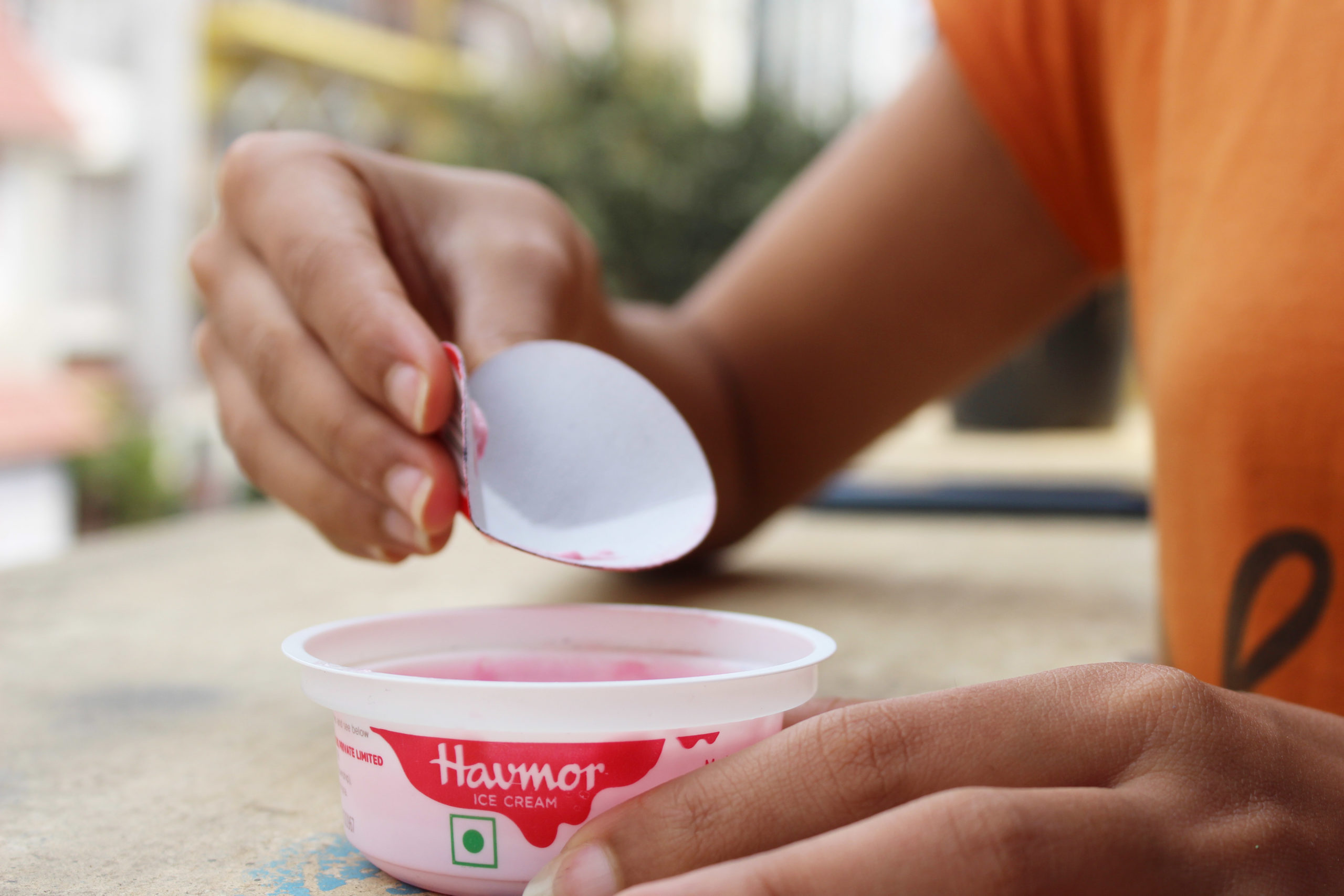
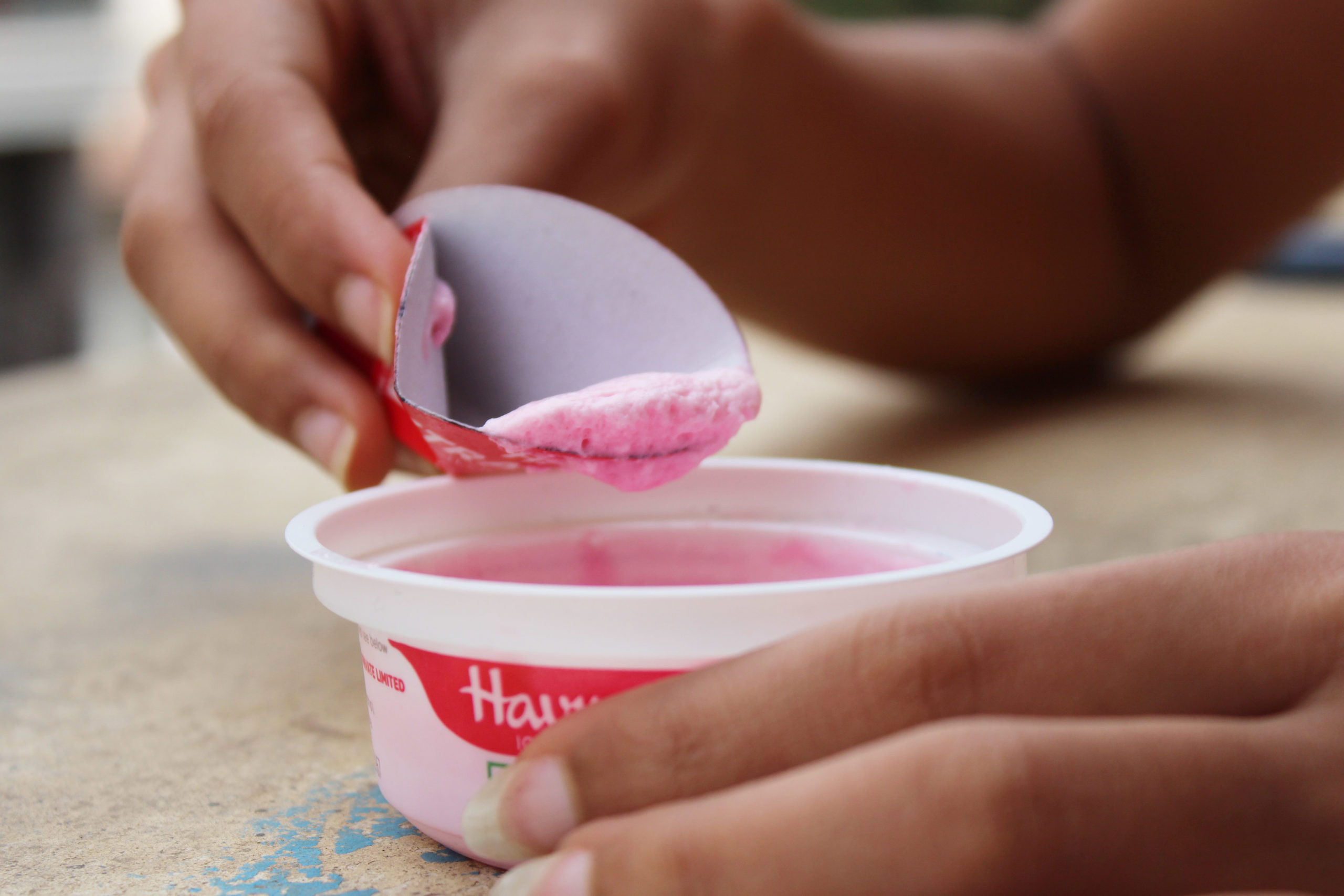
Every disposable spoon gets used once, then ends up in the same pile of waste. Crinkle removes the spoon from the equation entirely, building the scooping motion into the cup lid itself.

The idea draws from the bhelpuri serving spoon, a shape familiar in Indian street food, and works similarly to the paper cones used for hot chips at an Aussie fish and chip shop. Made from a sustainable material, Crinkle is a simple, intuitive redesign of an everyday object.

A plastic spoon used with a cup of ice cream
A landfill pile of waste
Paper prototype of the Crinkle cup lid
Opening the Crinkle lid
Folding one side of the Crinkle lid
Folding the second side of the Crinkle lid into a scoop
Using the Crinkle scoop to dig into ice cream
Picking up ice cream with the Crinkle scoop
Eating ice cream from the Crinkle scoop

Visual Merchandising

BRAND

A study of Hidesign, its products, and its brand values.

CHALLENGE

A basement store, needing light and presence brought from above.

REDESIGN

Expanded space for more products, with added storage built in.

LOOK

A modern look with a touch of gothic character.

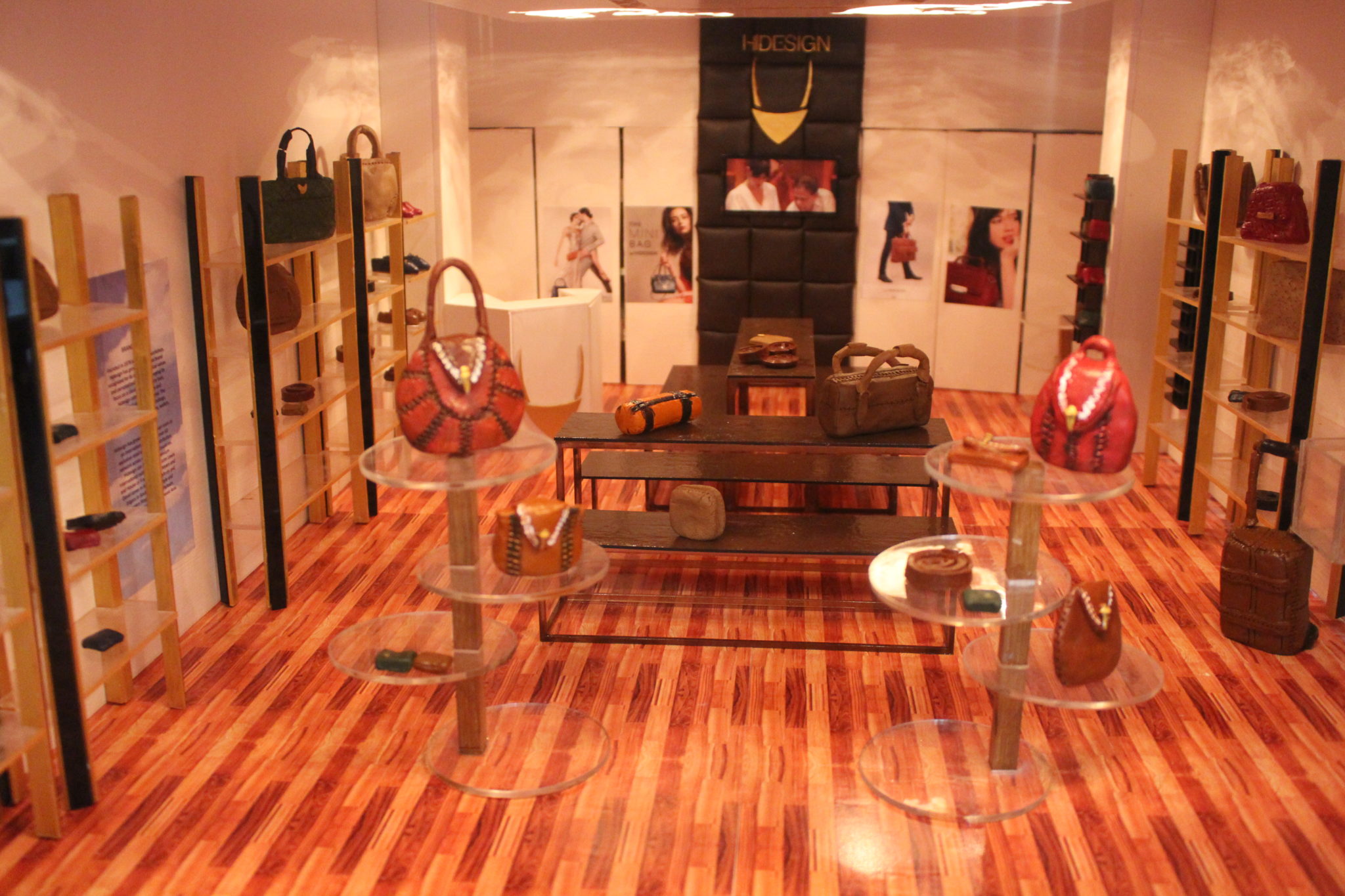
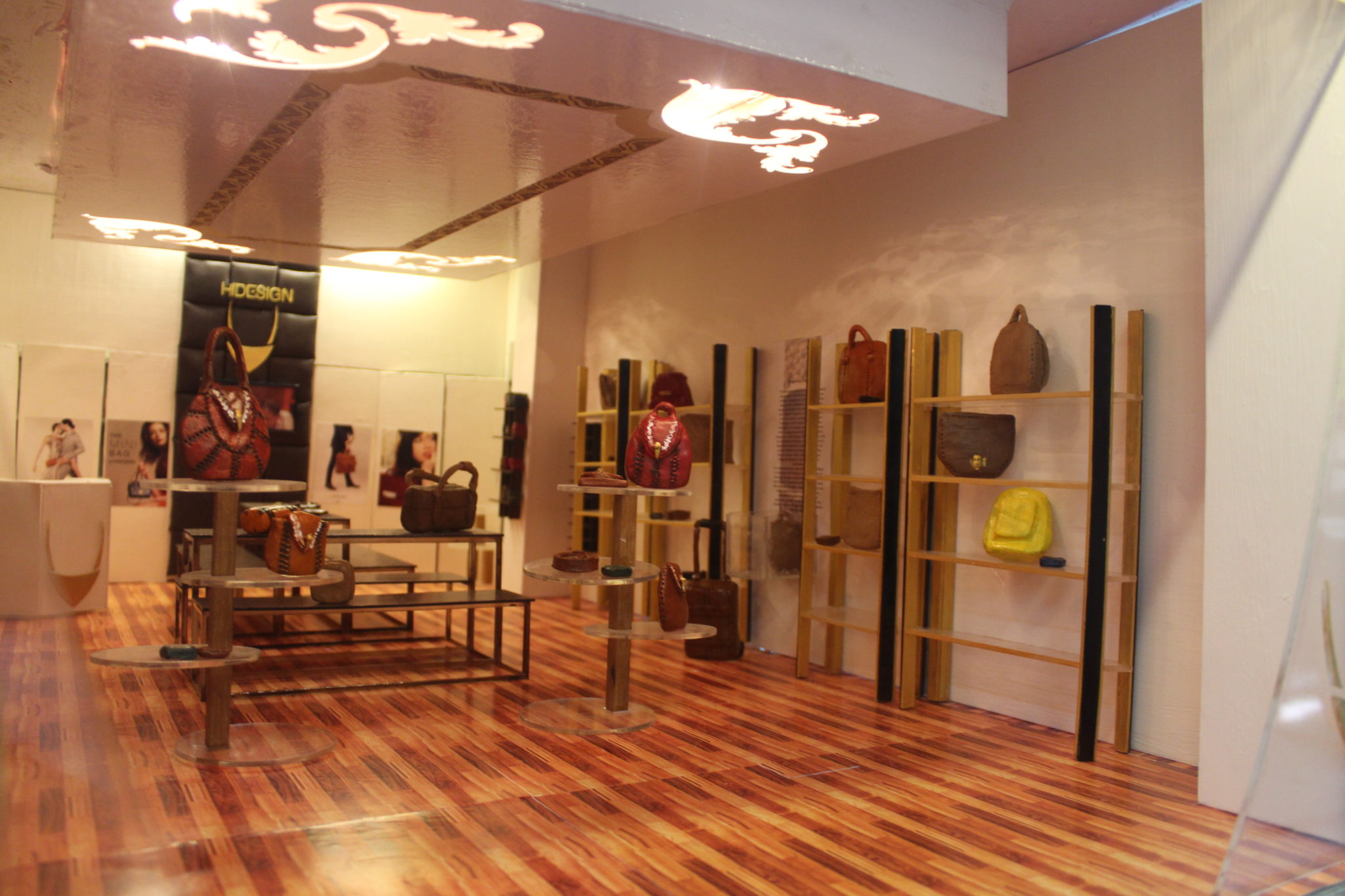
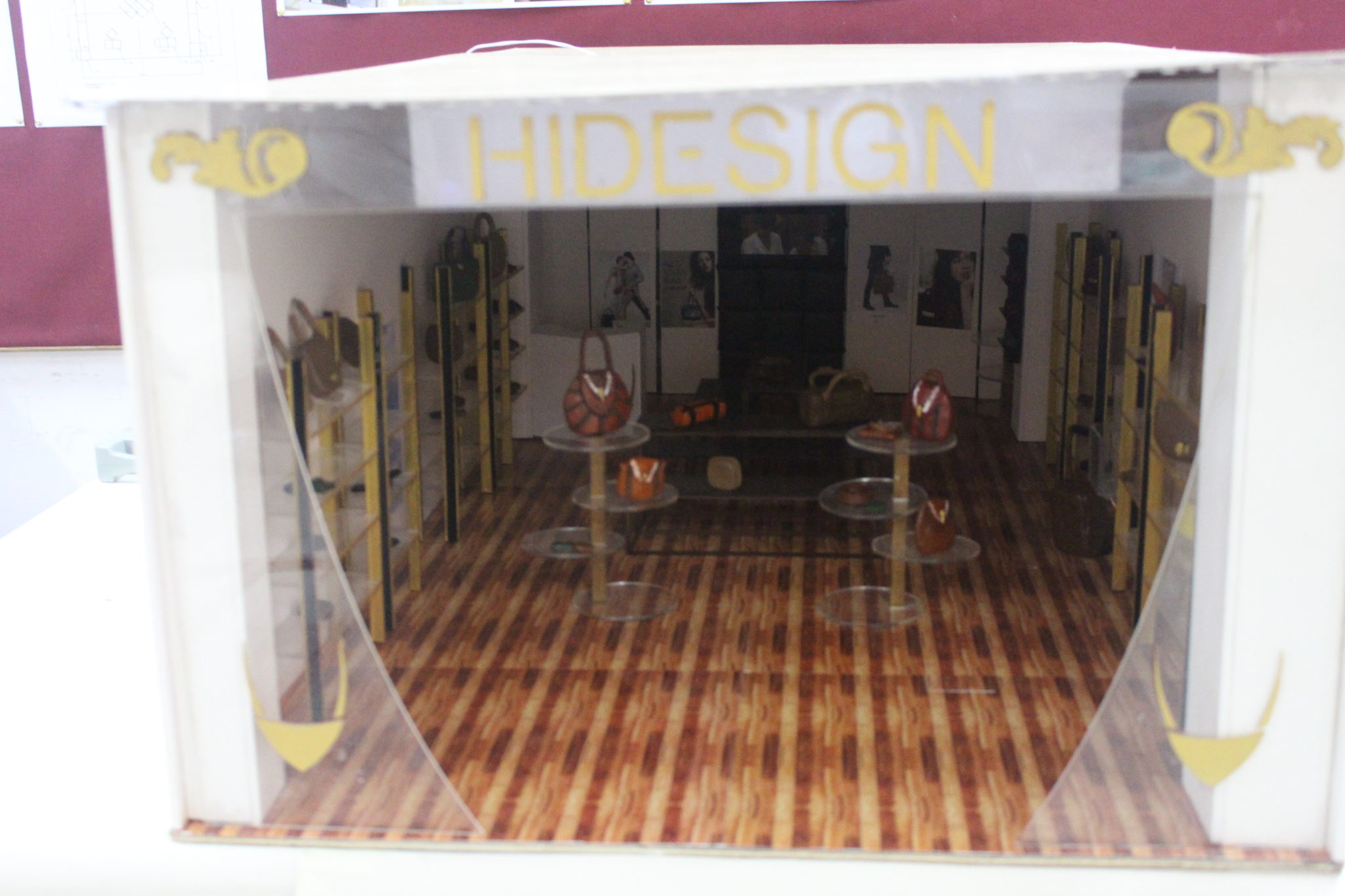
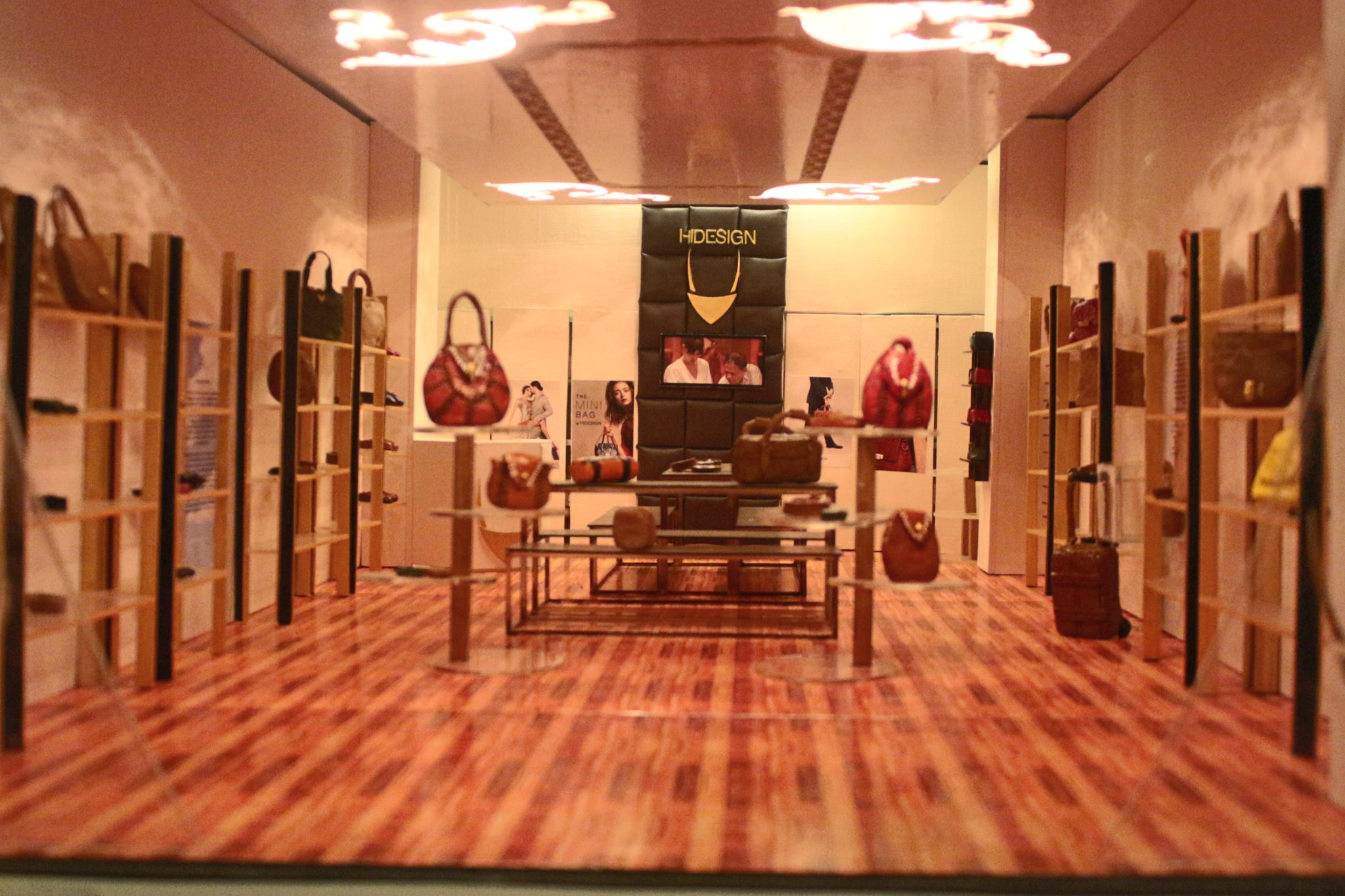
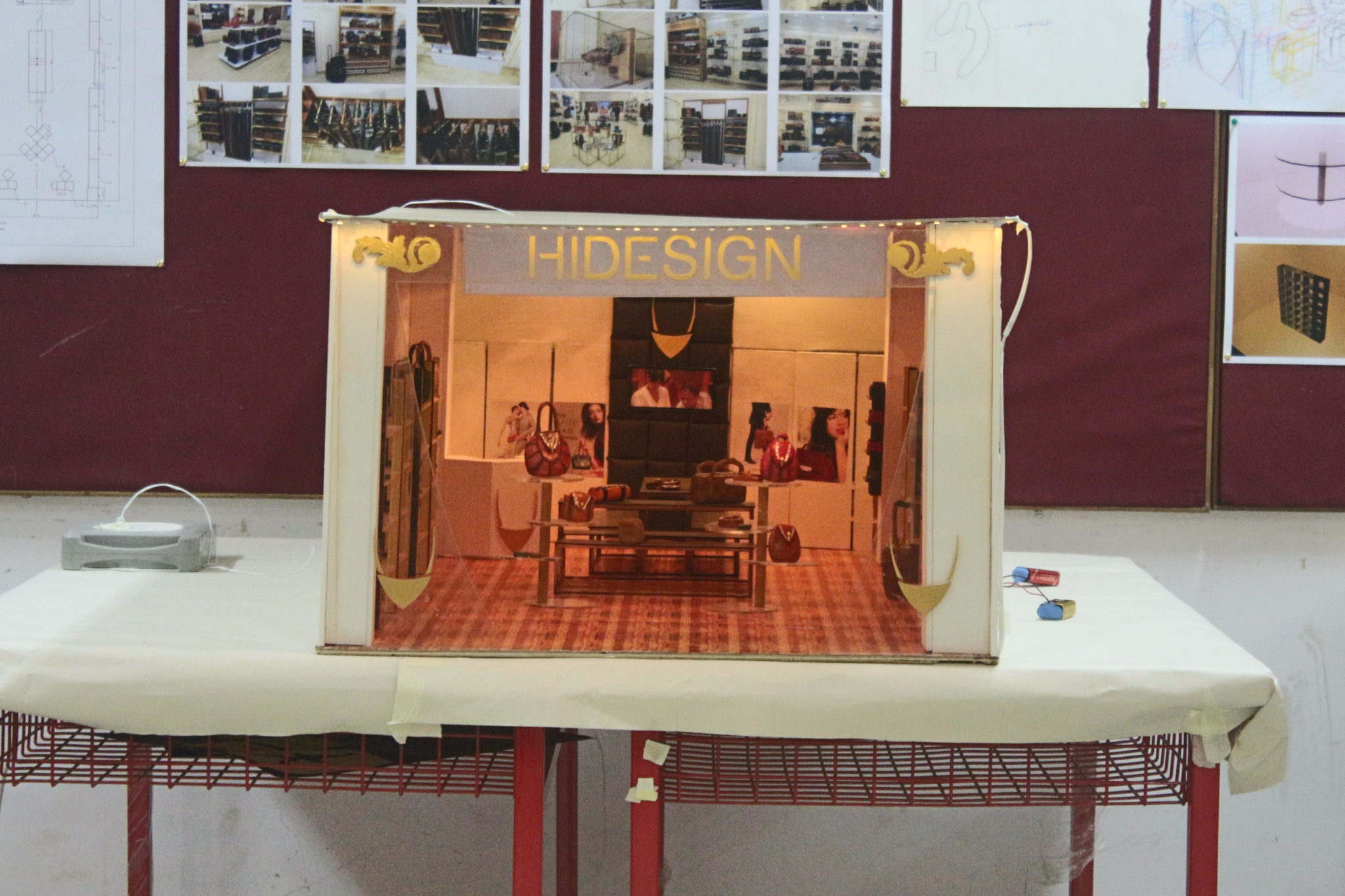
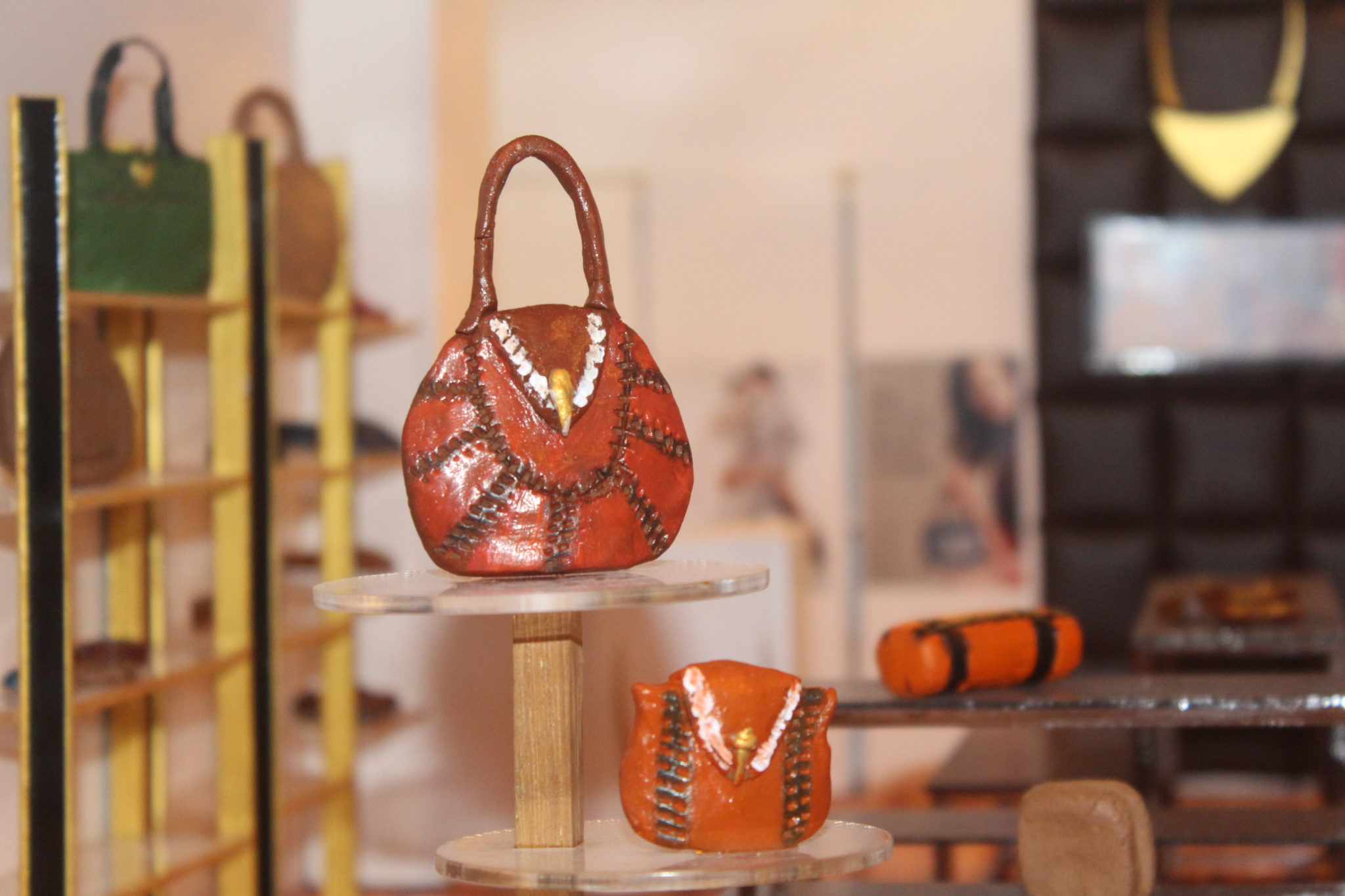
Visual merchandising work built around Hidesign, studying the brand, its products, and how customers move through its store. Set in a basement space, the redesign focused on drawing light and highlights from above, expanding the floor for more products, and adding storage, all wrapped in a modern look with a gothic touch.

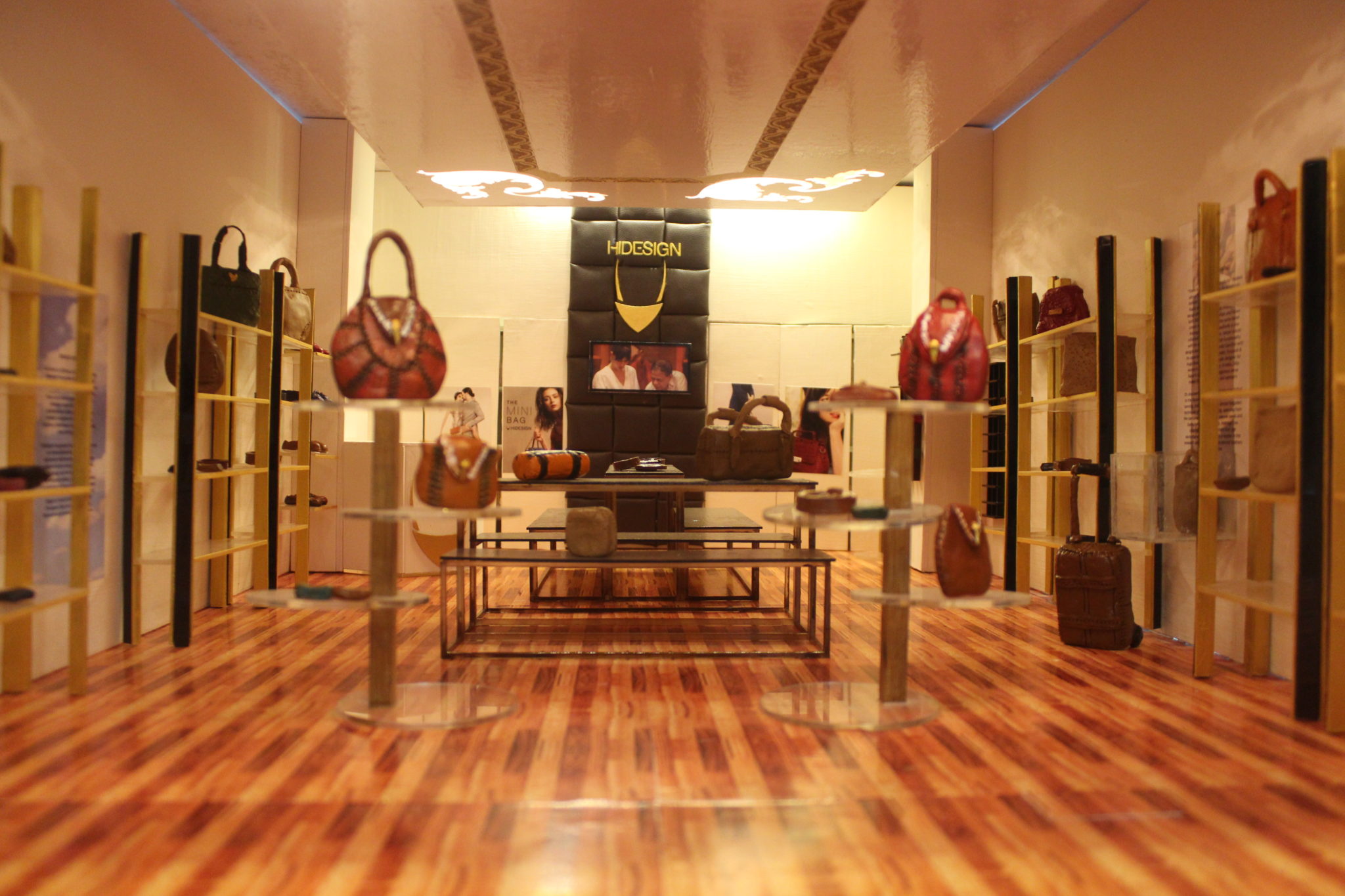
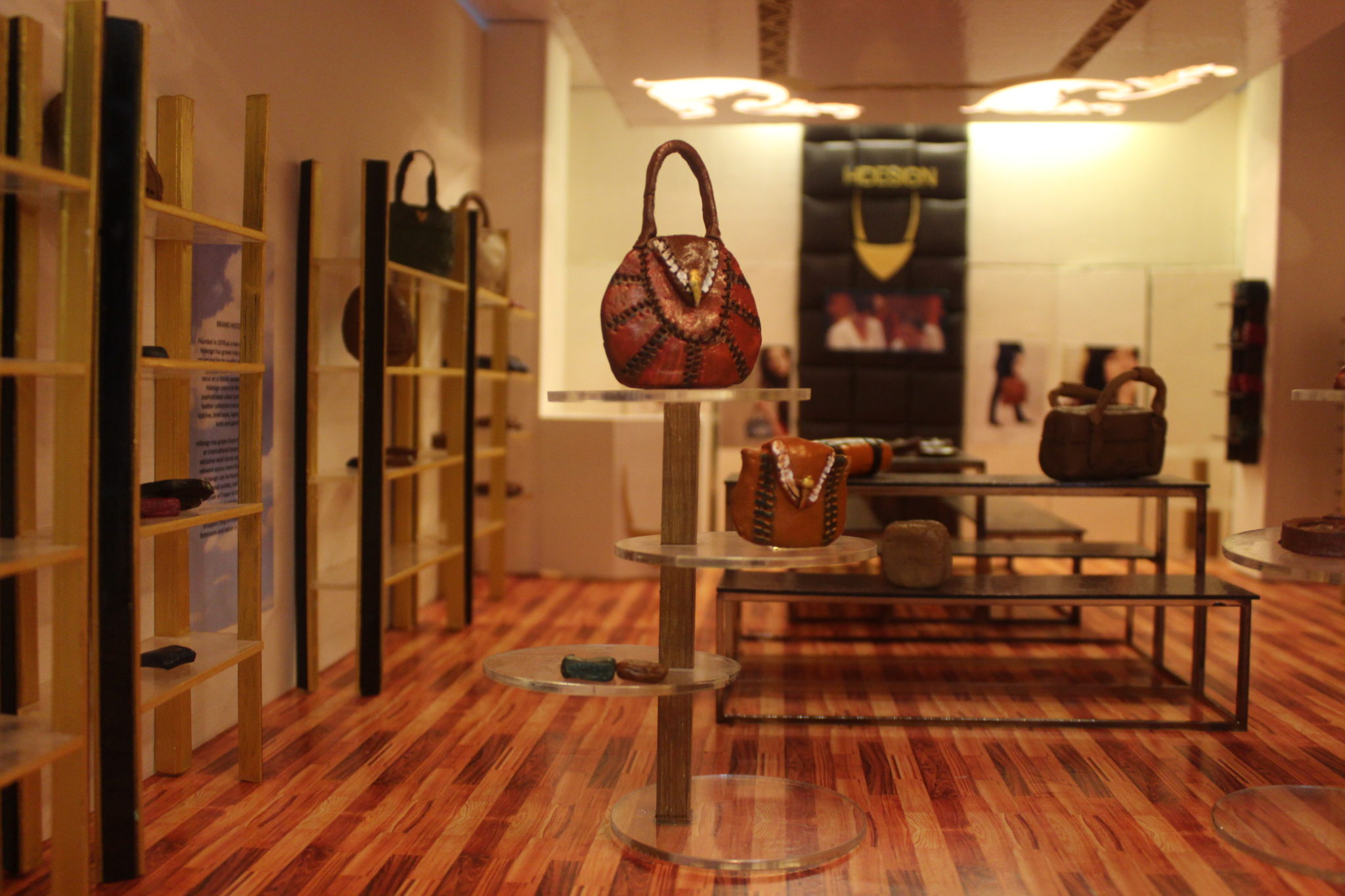
A physical scale model was built to test the layout and look before it was finalised. The views below show that model from different angles.

Interior view of the Hidesign store scale model
Interior view of the Hidesign store scale model, alternate angle
Interior view of the Hidesign store scale model, wide angle
Interior view of the Hidesign store scale model, side angle
Exterior lightbox view of the Hidesign store model
Interior view of the Hidesign store scale model, front angle
Full exterior of the Hidesign store diorama model
Close up of miniature product displays in the Hidesign model